
You’ve had this thought.
Probably more than once.
Quietly. Late at night. Between patients. While reviewing last quarter’s numbers.
You know email marketing matters.
You get that staying connected to past clients beats constantly chasing new ones. You’ve watched other practices keep their schedules full without discounts or last-minute panic promotions.
And still… you hesitate.
Not because you don’t believe in communication.
Not because you won’t invest in growth.
But because every decision you make? It carries real weight.
Your name is on the door. Your license is on the line. Your reputation gets built one client experience at a time.
In that context, hesitation isn’t fear.
It’s discernment.
And discernment is exactly what separates practices that last from practices that don’t.
The Reality of Running a Med Spa No One Prepares You For
Most med spa owners don’t struggle with motivation.
They struggle with bandwidth.
Your days don’t divide neatly into “clinical time” and “business time.” They overlap. Constantly. One moment you’re discussing treatment plans. The next you’re resolving staffing drama, reviewing inventory, handling compliance questions, or making split-second decisions that affect patient safety.
Marketing doesn’t exist in a vacuum inside a medical practice.
Every message you send shapes how patients interpret your expertise.
Every word reinforces trust. Or undermines it.
Every communication decision reflects the standard of care you uphold.
That’s why email marketing often feels… uncomfortable.
You’ve seen it done well. You’ve also seen it done poorly.
Overly promotional language. Aggressive urgency. Emails that feel more like retail spam than healthcare communication.
So instead of jumping in impulsively, you pause.
That pause isn’t weakness.
It’s evidence you understand what’s at stake.
Why Email Marketing Feels Riskier in Medical Aesthetics
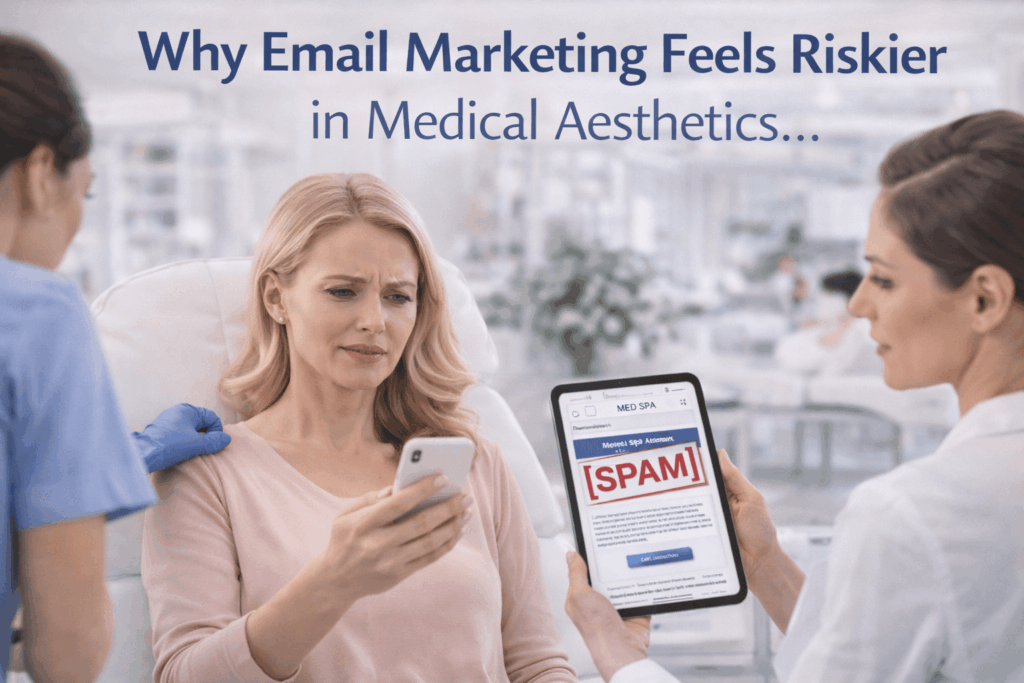
Email marketing doesn’t feel neutral in a med spa setting.
It feels personal.
And that’s because it is.
In retail or e-commerce, email mistakes are forgettable. In medical aesthetics? They’re not. Your clients are trusting you with their face. Their body. Often their confidence.
The way you communicate before and after treatments shapes how safe they feel long before they ever sit in the chair.
That’s why many med spa owners instinctively hold email marketing at arm’s length.
It’s not that you don’t see the opportunity. It’s that you understand the responsibility.
A poorly written email doesn’t just miss a sale. It creates doubt. It raises questions your team then has to walk back. It can unintentionally shift your brand from clinical and credible to promotional and transactional.
This is also why generic marketing advice rarely applies cleanly to med spas.
Healthcare-adjacent businesses require a different lens. One rooted in education, pacing, and respect for patient autonomy.
Email, when done correctly, supports that standard.
When done poorly? It undermines it.
Recognizing this difference doesn’t mean email marketing isn’t right for your practice.
It means it must be approached with the same care you bring to treatment planning, consent, and follow-up.
That mindset is not an obstacle.
It’s the foundation for doing it well.
Who This Article Is For (and Who It Isn’t)
This article is written for med spa owners who:
- Take pride in professionalism, ethics, and patient trust
- Want marketing that mirrors the care delivered in the treatment room
- Feel uneasy about loud, sales-driven tactics
- Prefer systems that support long-term growth over short-term spikes
This article is not written for practices that:
- Depend on constant discounts or flash promotions
- Want daily promotional blasts
- Are looking for shortcuts instead of structure
If you view your practice as a long-term asset—something you’re building carefully and intentionally—this conversation will feel familiar.
The Seven Most Common Hesitations Med Spa Owners Have About Email Marketing
(And Why Every One of Them Is Reasonable)
Let’s address them honestly.
1. “I Don’t Want to Waste Money on Something That Might Not Work.”
Why this concern makes sense
You’ve invested before.
Websites that didn’t convert. Ads that attracted the wrong audience. Marketing help that sounded confident but delivered nothing.
When margins matter, every decision carries weight.
Caution is not resistance. It’s stewardship.
A clearer perspective
Email marketing is not speculative when it’s built on existing relationships.
You’re not paying to interrupt strangers. You’re communicating with people who already chose your practice.
That distinction matters.
Email doesn’t rely on persuasion. It relies on continuity.
What tends to happen in real practices
Rather than dramatic spikes, practices notice steadier schedules. Shorter decision cycles. Improved patient follow-through.
The impact is cumulative, not theatrical.
A grounded next step
Before spending anything, map your current patient journey.
Identify one point where communication could reduce hesitation or increase clarity.
That’s where email earns its value first.
2. “I Don’t Have Time to Manage Another Marketing Channel.”
Why this concern makes sense
You already carry more responsibility than most people realize.
Adding “another channel” feels unrealistic when your calendar is already stretched thin.
A more accurate way to look at it
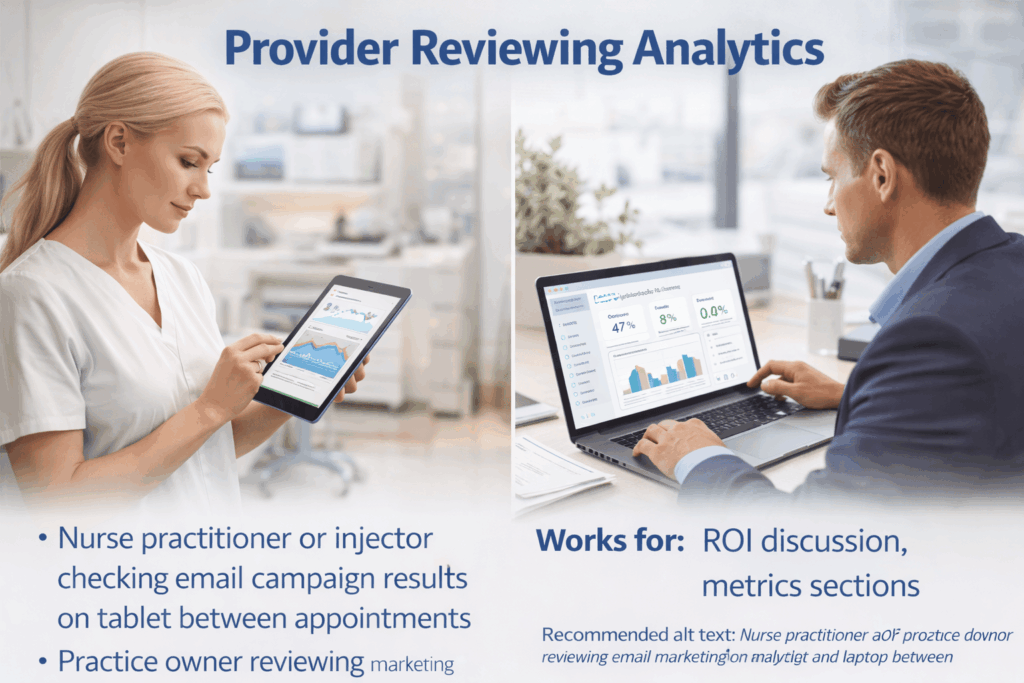
Email marketing should remove pressure, not add to it.
When built properly, it answers questions before they reach your staff. It reinforces decisions patients are already leaning toward.
It becomes support—not work.
What happens behind the scenes
Practices that stop improvising emails and instead rely on structured messaging often find email becomes their most predictable channel.
It runs quietly in the background. Doing its job. Without constant attention.
A practical next step
Write down the top five questions your front desk answers every week.
Those questions already belong in your email strategy.
3. “I’m Worried It Will Sound Salesy or Off-Brand.”
Why this concern makes sense
Your brand is built on trust, discretion, and professionalism.
Anything that feels pushy risks eroding credibility you’ve worked years to establish.
A healthier perspective
Effective email marketing in medical aesthetics does not pressure.
It clarifies.
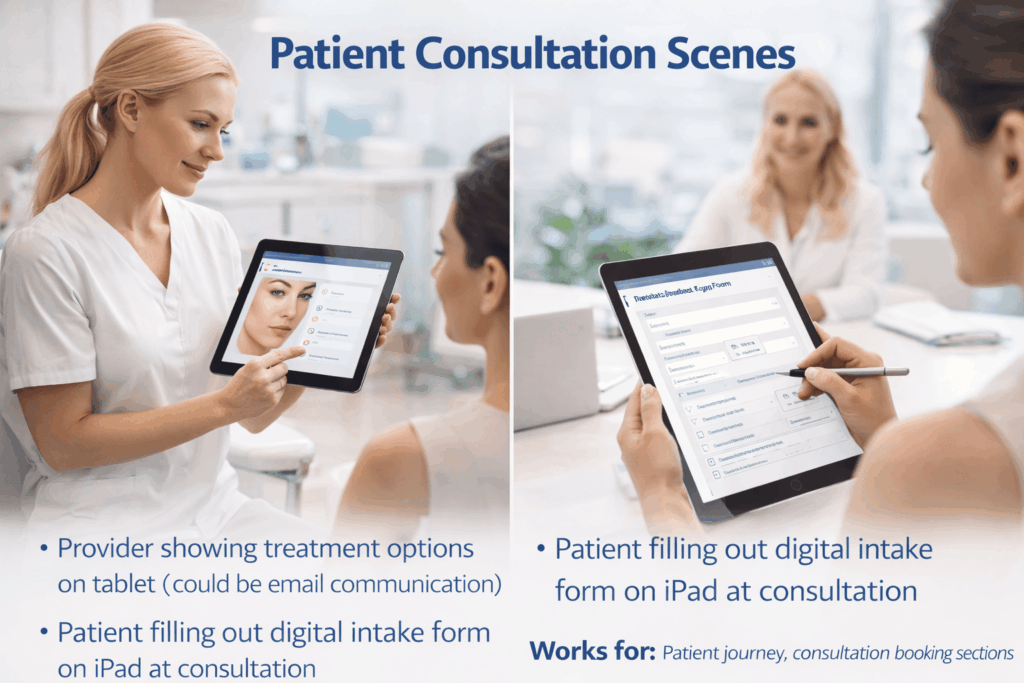
Patients don’t need to be sold. They need reassurance, education, and space to decide.
What consistently works
Emails that reflect in-office conversations outperform promotional messaging every time.
When patients recognize your voice, they engage. When they feel respected, they return.
A thoughtful next step
Think about how you explain procedures face-to-face.
That tone—not promotional copy—is the foundation of ethical email marketing.
4. “I’ve Been Burned by Marketing Help Before.”
Why this concern makes sense
Many marketers understand tactics but not medicine.
They move quickly. Overlook nuance. Underestimate how much words matter in healthcare-adjacent spaces.
That’s not just ineffective. It’s risky.
A clearer frame
Email marketing for med spas requires clinical literacy, ethical boundaries, and respect for patient psychology.
Not just writing skill.
What happens when it’s done correctly
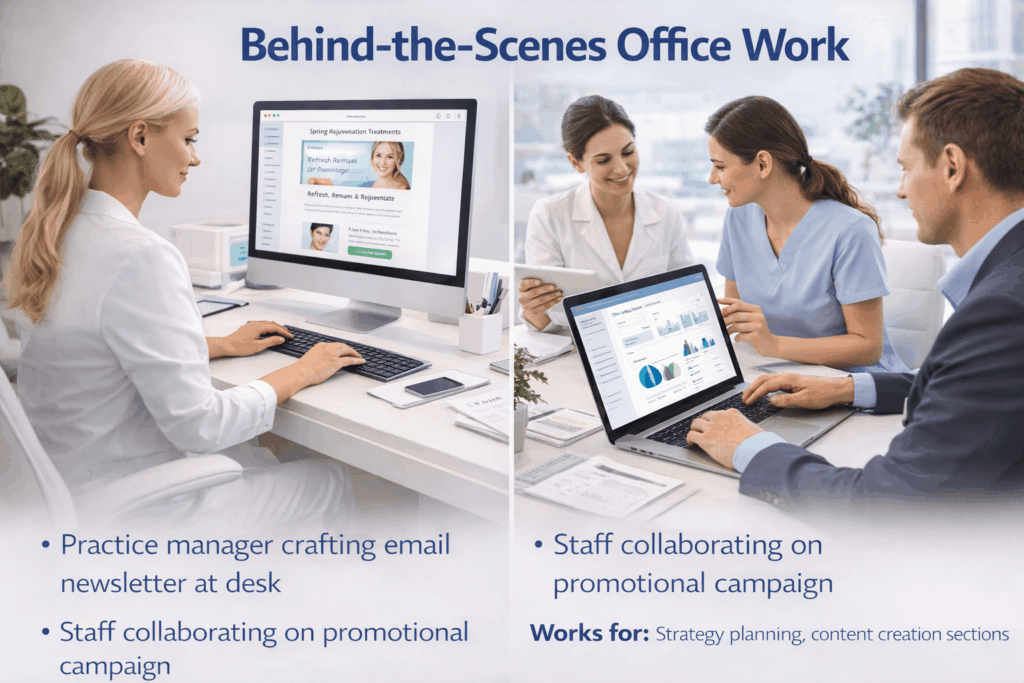
When messaging aligns with how patients actually think—cautiously, emotionally, over time—resistance drops.
Engagement improves. Trust deepens.
A practical next step
Before hiring anyone, ask how they approach patient education, compliance language, and informed decision-making.
The answers reveal far more than a portfolio.
5. “I’m Not Sure I’d See Real Results.”
Why this concern makes sense
Open rates don’t schedule treatments. Clicks don’t build loyalty.
You need outcomes that affect revenue and retention.
A more realistic understanding
Email marketing supports decisions already in motion.
It reinforces value. Reduces hesitation. Keeps your practice top of mind when timing aligns.
Its influence is often indirect—but meaningful.
What practices notice over time
Stronger reactivation. Fewer stalled consultations. Better response to new services.
Patients arrive already informed.
A grounded next step
Track outcomes that matter: return visits, rebookings, consultation follow-through.
Not vanity metrics.
6. “It Feels Too Technical or Complicated.”
Why this concern makes sense
Platforms. Automations. Compliance considerations.
Email can feel overwhelming.
A calmer way to see it
Complexity does not create effectiveness.
Clarity does.
Most med spas need far fewer emails than they think. The goal isn’t automation for its own sake. It’s continuity and reassurance.
What reliably works
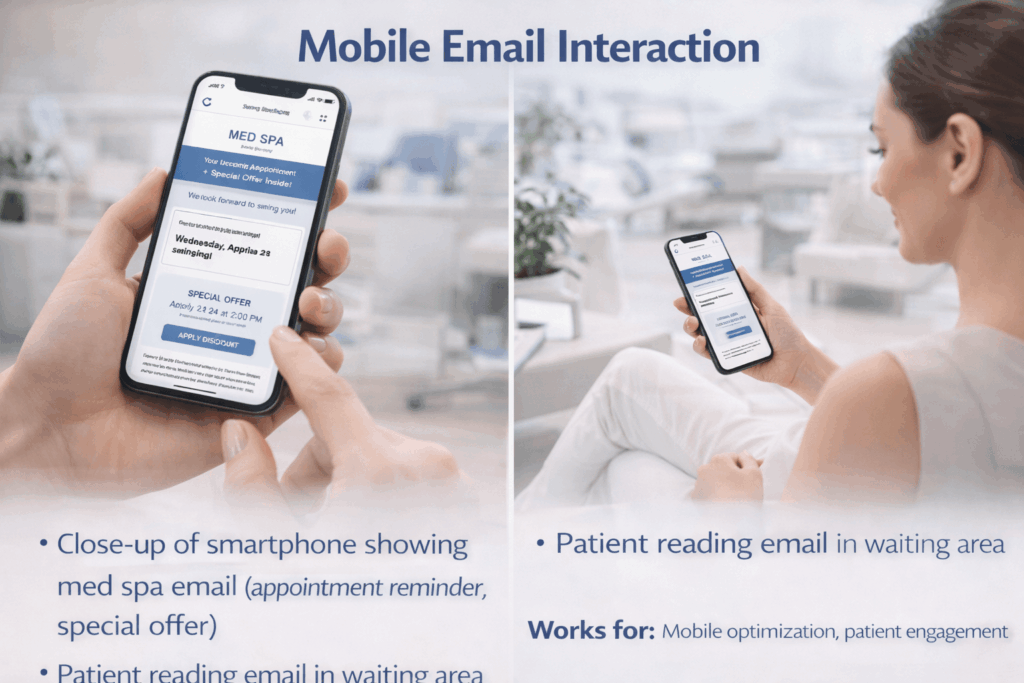
Simple systems outperform elaborate ones.
A thoughtful welcome sequence and consistent educational emails often outperform complex funnels that never fully launch.
A practical next step
Identify three emails every patient should read.
Build those first. Everything else is optional.
7. “I’m Not Ready to Commit to Something Big.”
Why this concern makes sense
You don’t make decisions lightly.
You want proof before expansion.
A more accurate perspective
Email marketing doesn’t require a leap.
It grows best when built intentionally, one layer at a time.
What usually happens
One well-written campaign becomes the foundation for everything else.
Confidence grows from results—not promises.
A simple next step
Start with one message that clearly communicates your philosophy of care.
Let that anchor everything else.
How Email Marketing Actually Supports Patient Decision-Making Over Time
Here’s the thing about email marketing that most people misunderstand.
The impact rarely looks dramatic in the moment.
Patients don’t usually book immediately after reading an email. Instead, something quieter happens.
They feel more informed. More confident. Less rushed.
Email works by supporting decisions patients are already considering.
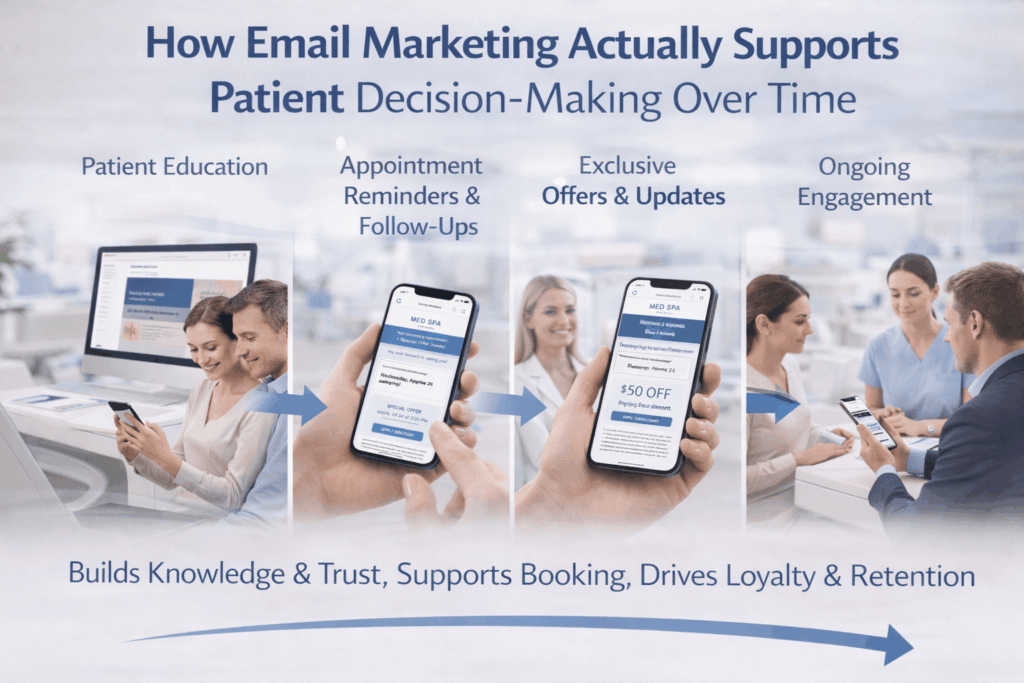
It answers questions they may not even realize they have yet. It normalizes hesitation instead of pushing past it. And over time, it positions your practice as a steady, reliable presence rather than a promotional voice competing for attention.
This is especially important in medical aesthetics, where decisions are rarely impulsive.
Clients may need weeks or months to feel ready. They may read your emails long before they reply. They may not click at all, yet still book because something you explained earlier stayed with them.
From the outside, it can look like “nothing is happening.”
From the inside, trust is being built.
That’s why practices that rely solely on immediate attribution often underestimate email’s value.
The influence is cumulative.
It shows up in smoother consultations. Fewer objections. Clients who arrive already aligned with your recommendations.
Email doesn’t replace conversations. It prepares patients for them.
And when patients arrive prepared, your team works more efficiently. Consultations feel calmer. Decisions feel easier for everyone involved.
The Difference Between “Having Email” and Having an Email Strategy
Many med spas technically “have email marketing.”
They send appointment reminders. Occasional announcements. Maybe promotions when schedules need filling.
But that’s not the same as having an email strategy.
A true strategy is intentional.
It considers timing, tone, and patient readiness. It acknowledges that different clients need different information at different stages. And it’s built to support—not replace—the care experience inside your practice.
Without a strategy, emails feel sporadic. Disconnected. Reactive.
With a strategy, emails feel cohesive. Familiar. Reassuring.
Patients know what to expect from you. Your voice stays consistent. Your messaging reinforces the same values across every touchpoint.
This is where many practices feel stuck.
They don’t need more emails. They need clearer thinking behind the emails they already send.
When that clarity is in place, email stops feeling like “marketing” and starts functioning like infrastructure.
Quietly doing its job. Supporting trust. Strengthening relationships.
That shift—from activity to intention—is what makes email sustainable in a med spa setting.
What Email Marketing Looks Like When It’s Done Right in a Med Spa

It doesn’t feel like advertising.
It doesn’t rely on urgency or discounts.
It doesn’t pressure patients into decisions.
Instead, it:
- Educates without overwhelming
- Reassures without minimizing risk
- Reinforces trust between visits
- Supports your team by answering questions early
It feels less like marketing and more like continuity of care.
That’s why it works.
A Final Perspective for Thoughtful Owners
Hesitation is not something to overcome.
It’s something to honor.
Practices built to last choose systems that compound quietly rather than tactics that spike briefly.
They prioritize clarity over noise. Trust over urgency.
Email marketing, when aligned with your values, becomes less about selling and more about staying present in the lives of people who already trust you.
And that is where sustainable growth lives.
Schedule your free consultation here
P.S.
If you decide to move forward, there should be no risk involved.
Through The Perfected Proof LLC, I offer a 100% satisfaction-based guarantee. We collaborate closely. You receive up to two rewrites. And if you are not completely satisfied with the final result, you receive a full refund. No questions asked.
My role is to ensure your email marketing feels like a natural extension of the care your practice already provides.
Not a gamble.
View comments
+ Leave a comment